AI automation that runs your operations, not your calendar
We map the workflows your team repeats every week and rebuild them as automations that run without supervision — connected to the tools you already use.
Manual process is invisible until you measure it
Most operational work is not one large problem. It is a hundred small handoffs — copying a record between systems, chasing an approval, re-typing an order, checking whether something arrived. Individually each is trivial. Together they set the ceiling on what your team can handle without hiring.
- Work spread across tools that do not talk to each other
- Steps that only happen because a specific person remembers them
- Handoffs that stall silently, with no one owning the delay
- Reporting assembled by hand, so it is always slightly out of date
What we build
We start from the workflow, not the tool. Once the sequence is mapped and the edge cases are named, we build it as an automation with error handling and monitoring, so a failure surfaces as an alert rather than as a customer complaint weeks later.
- Workflow mapping and scoping before any build starts
- Automations built on n8n, connected to your existing stack
- AI decision steps where a rule would be too rigid
- Error handling, retries and alerting on every critical path
- Documentation and handover so your team can operate it
How the engagement runs
Discovery call
We walk through the workflow you want to automate and identify where the time actually goes.
Proposal
Scope, integrations, milestones and cost, in writing, before any work begins.
Build and test
We build in milestones and test against real scenarios from your business, not synthetic ones.
Deploy and hand over
We deploy, document the system and train your team, then stay available for changes.
Related work
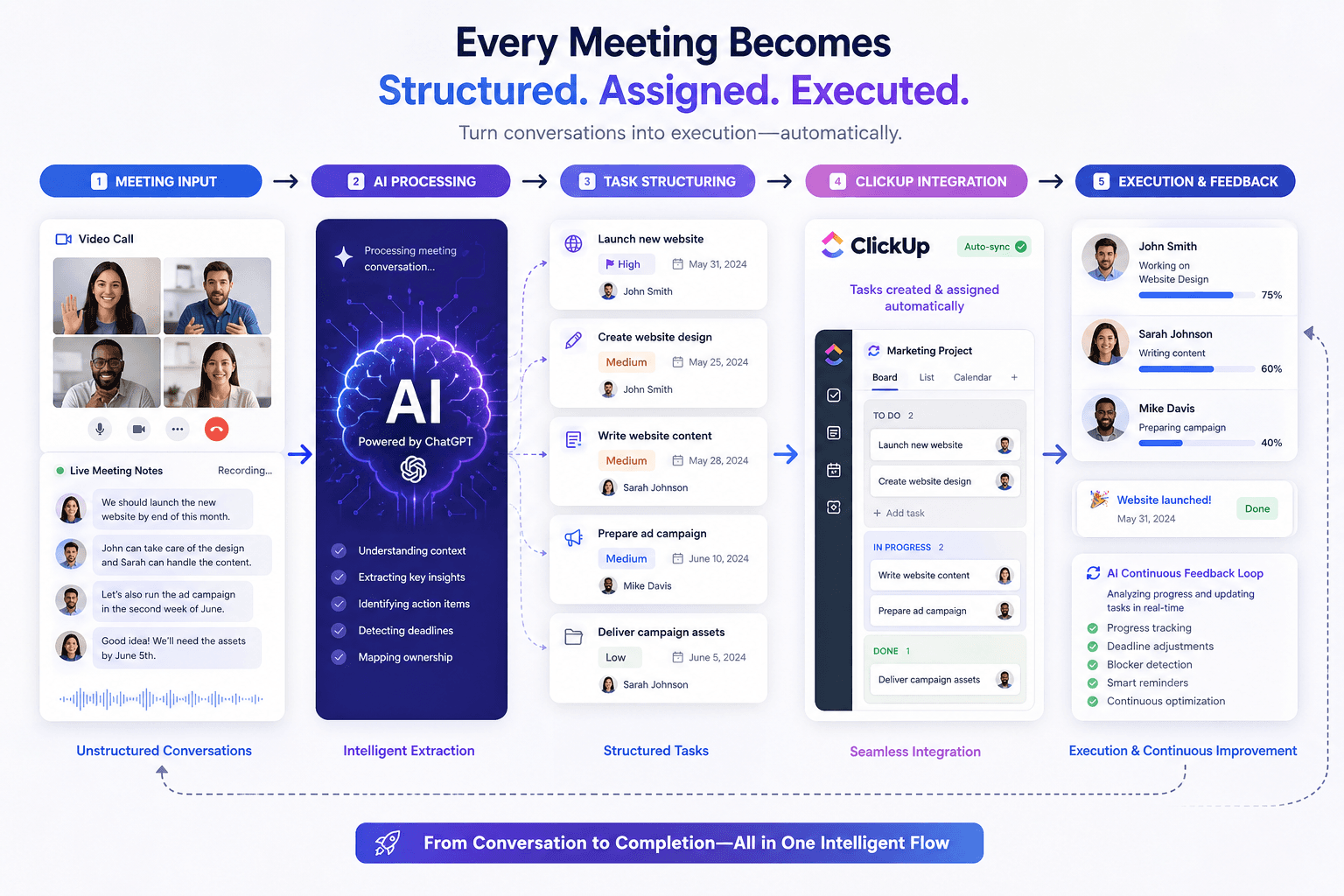
Every Meeting Becomes Structured. Assigned. Executed.
Turning meeting notes into structured, assigned ClickUp tasks automatically.
Read the case study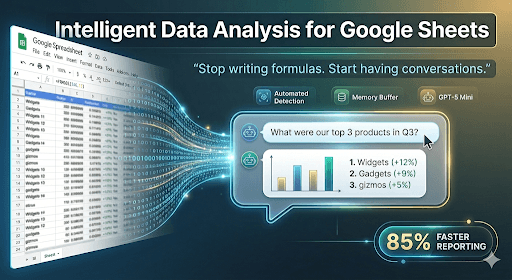
Intelligent Data Analysis for Google Sheets
Transforming static spreadsheets into conversational intelligence units.
Read the case study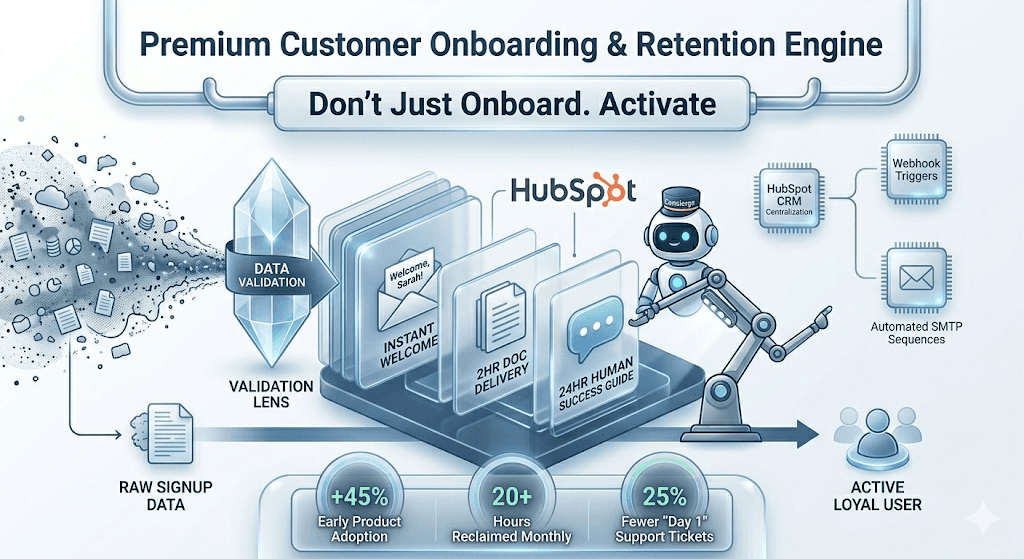
Premium Customer Onboarding & Retention Engine
Orchestrating High-Touch, Automated Post-Purchase Experiences at Scale
Read the case studyFrequently asked questions
What kinds of workflows are worth automating?
Do you replace our existing tools?
What happens when an automation fails?
Can our team change the automations afterwards?
How do we know it is actually working?
Tell us what you want to automate
A short call to scope the workflow, followed by a written proposal with scope, timeline and cost before any work begins.